
Ostomy care
Good ostomy care is important to prevent unpleasant complications. It is much more than just replacing a skin barrier and putting a new pouch around it. Knowledge about the different types of stomas and the different materials for ostomy care is essential.
What is a stoma?
With a stoma, part of the intestine is pulled out through the abdominal wall and sutured. This creates a new exit for the stool and the stool comes out through the stoma instead of through the anus. The stool is then collected in a special stoma bag.
When to have a stoma?
When stool can no longer exit through the anus or urine, a stoma is the solution. Sometimes a stoma is temporary when part of the intestines needs to rest after surgery, for example. But a stoma can also be permanent. Situations that can cause people to get a stoma are:
- Chronic intestinal inflammation
- Non-functioning bowel
- Colon or rectal cancer
- Neurological disorders
Many people are shocked when they hear that they have to live with a stoma. Of course, it is not nothing and it takes time to learn to live with a stoma.
As a healthcare professional, it is important to be able to reassure the patient and explain how to handle the stoma, change the equipment and how to care for the stoma. How the stoma material is changed depends on the system of the stoma.
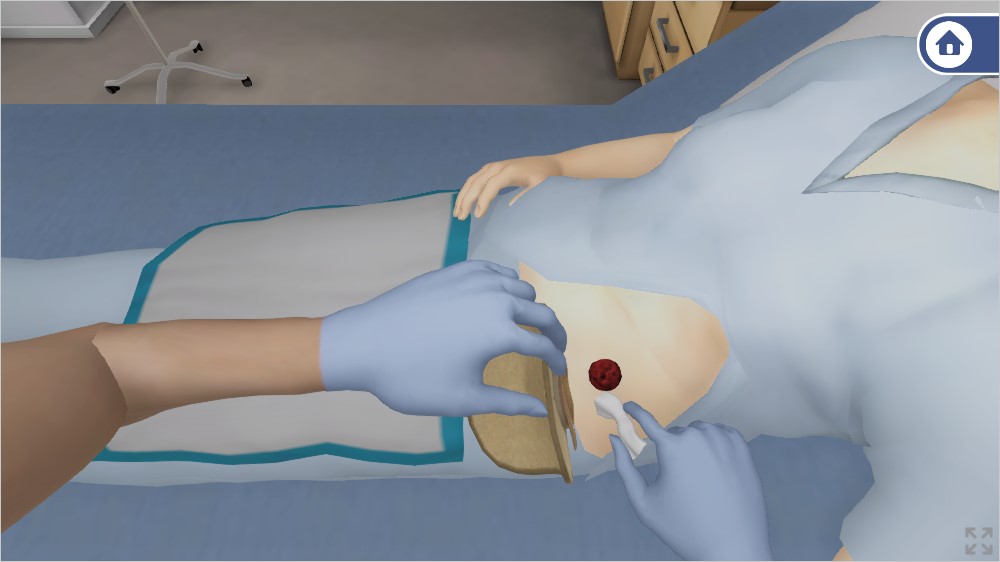
Want to pick up your knowledge and practice how this works? This is possible via CareUp’s 3D simulation. This way you ensure that you are and remain competent in this action. Start practicing right away:
What are the different types of stomas?
There are three types of stomas. An ileostomy and a colostomy (bowel stomas) and then there is a urostomy. The name of the stoma refers to the part of the intestine that is used to create the stoma.
Ileostomy
An ileostomy is also called a small bowel stoma. This stoma is used when, for example, the large intestine needs to be spared or when it has been removed and no new connection can be made to the anus.
The ileostomy can be created temporarily or permanently. The stoma is created temporarily when the colon needs to rest to recover.
Temporary ileostomy
If the stoma is temporary, a loop ileostomy is used. This is a stoma with two openings next to each other. One opening is for the stool and from the other only mucus comes out of the mucous membrane of the intestine. If the entire colon is removed, a terminal ileostomy is created.
Urostomy
A urostomy is a surgically designed diversion for urine. The urostomy is made from a piece of the small intestine to which the ureters are attached. This is brought out through the skin and attached there. The urostomy has a urostomy bag to collect the urine. A person can get a urostomy when the bladder has been removed, for example.
Colostomy
The colostomy is also called the colon stoma. This stoma is used when the colon has been partially or completely removed. There is then no other way to make a connection with the anus or the remaining intestine. As with the ileostomy, the colostomy can be created temporarily or permanently.
Stoma care
In the morning, before you eat and/or drink, the stoma is least active. Therefore, this is the most suitable time for stoma care. A stoma with a one-piece pouching system should be completely replaced once a day. For a stoma with a two-piece pouching system, the skin barrier should be changed 2 to 3 times a week. The bag also needs to be replaced.
Ostomy pouching systems
There are two types of pouching systems: a one-piece and a two-piece pouching system. With the one-piece pouching system, the pouch is attached to the skin around the stoma with an adhesive layer. With a two-piece pouching system, the pouch is attached to the skin barrier with separately interchangeable pouches.
Want to know how this action works? Do the CareUp 3D simulation. This way you know exactly how this action works and what to look out for.
When should you empty a stoma bag?
The advice is to empty a stoma bag when it is a third or half full. In addition, it is advisable to empty the pouch before you go to sleep. In the beginning, it is useful to set the alarm once at night, so that you can check whether you need to empty the bag once more at night.
When someone has an ileostomy, the stool is usually thin. Collection bags are often used that can be emptied.
Ostomy Care Protocol
The stoma care protocols for the various stomas are partly similar. These are roughly the steps you need to take according to the general ostomy care protocol for changing ostomy bags (Vilans KICK):
*Always practice hand hygiene before, during and after the operation!
- Remove the old skin barrier and dry the skin thoroughly
- Clean the skin around the stoma (Make sure you cover the stoma properly)
- Insert the new adhesive
- Two-piece system: place the pouch over the barrier opening
One-piece system: The pouch is already attached to the skin barrier
- Check that the opening of the skin barrier is properly fitted around the stoma
- Make sure the pouch hangs sideways with the air filter facing up
Want to know how this works in practice and which materials you use for this and how you can best perform these actions? You will learn it with CareUp’s 3D simulation! Start this training today and make sure you become and remain proficient in this action.
Complications of stoma
A stoma can cause various complications. It is important that you recognize these complications in time, so that something can be done about them. Possible complications include:
- Peristomal hernia: a rupture around the stoma
- Prolapse: a bulge of the stoma
- Necrosis: the stoma turns black due to reduced blood flow
- Stoma congestion: this causes the stoma to swell or change color
- Ostostenosis: narrowing or blockage of the stoma, preventing urine or stool from leaving.
- Various skin problems around the stoma, such as a wound next to the stoma or irritated skin
- Most people with a stoma also suffer from leaks from time to time. These can almost always be remedied by finding out the cause of the leak.
Ostomy dehiscence
A stoma can detach from the skin. This is called a stoma dehiscence. This usually happens in the first weeks after surgery. The abdomen can sometimes expand after surgery, causing too much tension on the attachment of the stoma. A dehiscence can be deep or shallow. In case of severe dehiscence, the stitches must be removed and extra care is required. In the case of a shallow dehiscence, it is sufficient to clean the skin around the stoma extra. In this case, use a one-piece system so that the skin barrier is changed every day and the skin can be cleaned.
Want to know more about how to change the baseplate and pouch with a one-piece system? Start now with the 3D simulation of CareUp. You will learn both the theory and practice of this important action.
Stoma irrigation
Flushing a stoma is a reserved procedure that may only be performed by a competent and authorized healthcare professional on the instructions of a doctor. Flushing a stoma only occurs with a colostomy and is only possible if the largest part of the colon is still intact. The stoma must then be connected to the colon desendens (the descending part of the colon).
The surgeon indicates whether or not the patient can rinse. After irrigation, the bowel is clean and there is no stool for 24 to 48 hours. In total, stoma irrigation takes about an hour at a time.
Related courses
Curious about what CareUp can do for you?
We are happy to talk to you to see what CareUp can do for you or your healthcare institution/school.

